
Common Firearms Safety Course Questions and Answers
We get the same questions over and over, from students booking their first course and from people who have owned firearms for years and still are not sure how a piece of the system works. This page collects the ones we hear most, with plain answers. Where a question has a fuller guide of its own, we link to it so you are not stuck reading a paragraph when you wanted the whole thing.
Q: What does PAL licence mean?
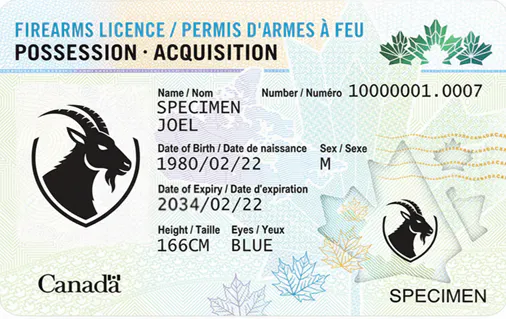
PAL stands for Possession and Acquisition Licence. It is the firearms licence required in Canada to buy, possess, or own firearms and ammunition. People also call it a gun licence or firearms licence. They all mean the same document.
Q: Can I shoot a gun without a PAL?
Yes. You do not need a PAL to shoot a firearm. Many ranges and clubs rent firearms to people who do not hold a licence, and in that case a Range Safety Officer supervises you to make sure you are handling the firearm safely and following the range rules.
You can also be brought to a range by someone who holds a valid PAL. When that happens, the PAL holder is responsible for you. They have to be present and supervising directly, and they are accountable for your safe handling of their firearm. No RSO is required in that situation because the licensed person is filling that role.
Q: Is the CFSC the same as the PAL?
Not quite, and the difference matters. The CFSC (Canadian Firearms Safety Course) is the training. The PAL is the licence the government issues to you after you pass that training and your application is approved. People use the terms interchangeably in conversation, but they are two separate things: one is a course, the other is a federal licence.
If you want the full picture of how the course leads to the licence, start here: How to Get Your PAL in Canada.
Q: Can I just challenge the test instead of taking the course?
No. There is no option to challenge the CFSC or CRFSC by writing the exams without taking the course. That option was removed in 2015, and it applies to everyone, including experienced shooters and people applying from outside Canada. You take the full in-person course and pass both the written and practical tests. There are no exceptions to this, no matter how much prior experience you have.
We say this plainly because we still get the call regularly, usually from someone who has handled firearms for decades and views the course as a formality. The course is mandatory. Knowing the material cold is great, and it will make your day easier, but it does not exempt you from sitting the course.
Q: Can I take the Canadian Firearms Safety Course online?
It depends what you are after. If you want the PAL, the certifying course has to be taken in person. That is a requirement set by the RCMP Canadian Firearms Program, and a fully online course does not satisfy it.
If you want the knowledge and not the licence, or you want to walk into your in-person course already knowing the material, our online course is built for exactly that. It covers every concept in the CFSC and CRFSC at your own pace, so your in-person day is spent on the hands-on handling and testing rather than learning the theory cold. Silvercore Club members get our online courses at no cost, which is one of the more practical reasons people join before they book. See the Silvercore Online Firearms Safety Course.
Q: How long does it take to get your PAL?
It depends, but typically three to six months from the start of your course to the licence in your hand.
The short version: there is a 28-day waiting period that starts when the Canadian Firearms Program receives your application, and as a rule your file is not actioned until after those 28 days. Plenty of things can stretch the timeline beyond that, and the single biggest one is a mistake on your application.
We have a full guide that breaks down every stage and the common delays: How Long Does It Take to Get Your PAL in Canada?. If your application is already in and dragging, this one is more useful: Why Is My PAL Taking So Long?
Q: How much does a PAL cost?
There are two costs and people often blur them: the RCMP licence fee, and the cost of the course. As of March 31 2026 the RCMP application fees are $70.38 for a non-restricted PAL, $93.84 for a licence that includes restricted privileges, and $46.92 to upgrade an existing non-restricted PAL to add restricted later. Course training is separate and goes to the instructor or training facility.
The full breakdown, including how the course price factors in and where you can cut the cost, is here: How Much Does a PAL Cost in Canada?
Q: How much is the Canadian Firearms Safety Course?
Course pricing varies by provider and province. At Silvercore, the combined CFSC and CRFSC course is $270 plus tax, which covers both courses and both sets of exams in one booking and saves you $55 over booking them separately. On their own, the non-restricted CFSC is $190 and the restricted CRFSC is $135. You can see dates and book at our combined CFSC/CRFSC course page.
Q: How long is the CFSC course?
The RCMP sets a minimum of 8 hours of in-person instruction for the CFSC, not counting breaks or testing. Real-world course length runs longer than the bare minimum once you account for the written and practical exams, and the testing time depends partly on class size.
Q: What is the CRFSC?
The CRFSC is the Canadian Restricted Firearms Safety Course. It is the training required to apply for restricted firearms privileges, which is what people mean when they say RPAL. You complete the CFSC first (or already hold a valid PAL) before the CRFSC counts toward your restricted privileges.
If you are trying to decide whether you need the restricted course at all, this lays out the difference clearly: PAL vs RPAL in Canada.
Q: What's the difference between Restricted and Non-Restricted firearms?
Non-restricted firearms are typically rifles and shotguns. Restricted firearms are typically handguns, meaning pistols and revolvers, along with some long guns that fall into the restricted class based on barrel length or other criteria.
Non-restricted and restricted are classification categories, and the classification standards are set out in federal law, not by the seller or the manufacturer. The PAL vs RPAL guide covers what each licence actually lets you do.
Q: Who classifies firearms in Canada?
A firearm's classification is determined by criteria in subsection 84(1) of the Criminal Code and by regulations made through Orders in Council. Only Parliament and the Governor in Council can change those classification criteria. It is a federal matter, not something decided at the point of sale.
Q: What can you do with a PAL?
What you can buy and own depends on which licence you hold. A non-restricted PAL lets you acquire non-restricted firearms. A licence that includes restricted privileges lets you acquire both classes. The licence also governs ammunition purchases.
There is more to it than just buying firearms, and we walk through the full list here: What Can You Do With a PAL?
Q: Can non-citizens or non-residents get a PAL?
Yes. Non-residents can take the CFSC or CRFSC in person in Canada and apply for a PAL. The training requirement is the same: only the Canadian CFSC/CRFSC satisfies it, and a foreign safety course does not count. The application process differs in a few ways for non-residents, including a good-conduct letter requirement in some cases and applying by mail rather than online.
We cover the specifics here: Can Non-Citizens Get a PAL in Canada?
Q: Do Indigenous people need a PAL?
Yes, though there are adaptations to how the licence can be obtained, including provisions around safety training certification and application fees. The Aboriginal Peoples of Canada Adaptations Regulations (Firearms) under the Firearms Act set these out, and the RCMP publishes guidance on the exceptions. We recommend confirming the current details directly through the RCMP, since this is an area where the specifics matter to your situation.
Q: Are guns and firearms the same thing?
Yes. The terms are used interchangeably, the same way PAL, gun licence, and firearms licence all refer to the same document.
Q: Can you hunt without a PAL?
Yes, in a few ways, provided you hold the proper hunting credentials. You can hunt with a bow, which does not require a PAL. You can also hunt alongside a partner who holds a firearms licence and use their firearm, as long as you are under their direct and immediate supervision. And depending on your circumstances there are other paths into hunting that do not start with a PAL. If hunting is your goal, the CORE program is usually the more relevant starting point than the PAL.
Q: Where does Silvercore teach the CFSC and CRFSC?
Silvercore teaches the CFSC, CRFSC, and combined CFSC/CRFSC at multiple locations across BC. The home training facility is in Delta. For the Delta schedule, address, and drive times from the surrounding Lower Mainland, see PAL course in Delta. More location pages are being added.
The Silvercore Path to Your PAL
Most people land on a page like this with one question and leave with three more. Here is the order that actually works:
- Start with the full guide. How to Get Your PAL in Canada is the pillar. It covers the whole process start to finish.
- Figure out which licence you need. PAL vs RPAL in Canada before you book, so you book the right course.
- Know the cost going in. How Much Does a PAL Cost in Canada?
- Book your course. The combined CFSC/CRFSC course gets you both in one booking.
Join the Silvercore Club
If you are getting your PAL, the Silvercore Club is worth a look before you start spending. Membership is $59 a year and includes our online firearms safety courses at no cost, which on its own offsets a good chunk of the fee. It also covers ATT eligibility for restricted firearms, $5 million in liability insurance, partner pricing with the brands we work with, and access to The Outpost, our private members-only podcast. Join the Silvercore Club.
Have a question we have not answered here? We would like to hear it. Contact us by phone, email, or social media.
Travis Bader Silvercore Outdoors


